 +91 76719 19744

Land Preparation & Seed Rhizomes
Pre-plantingBeds are raised on friable loam soils and healthy mother and finger rhizomes are selected as seed material, which strongly influences yield and curcumin content.
Exporting Premium Tobacco · Cashew · Rice · Turmeric · Spices from Andhra Pradesh, India
Available as raw finger, polished finger, bulb and powder. All grades tested for curcumin content, moisture and purity.
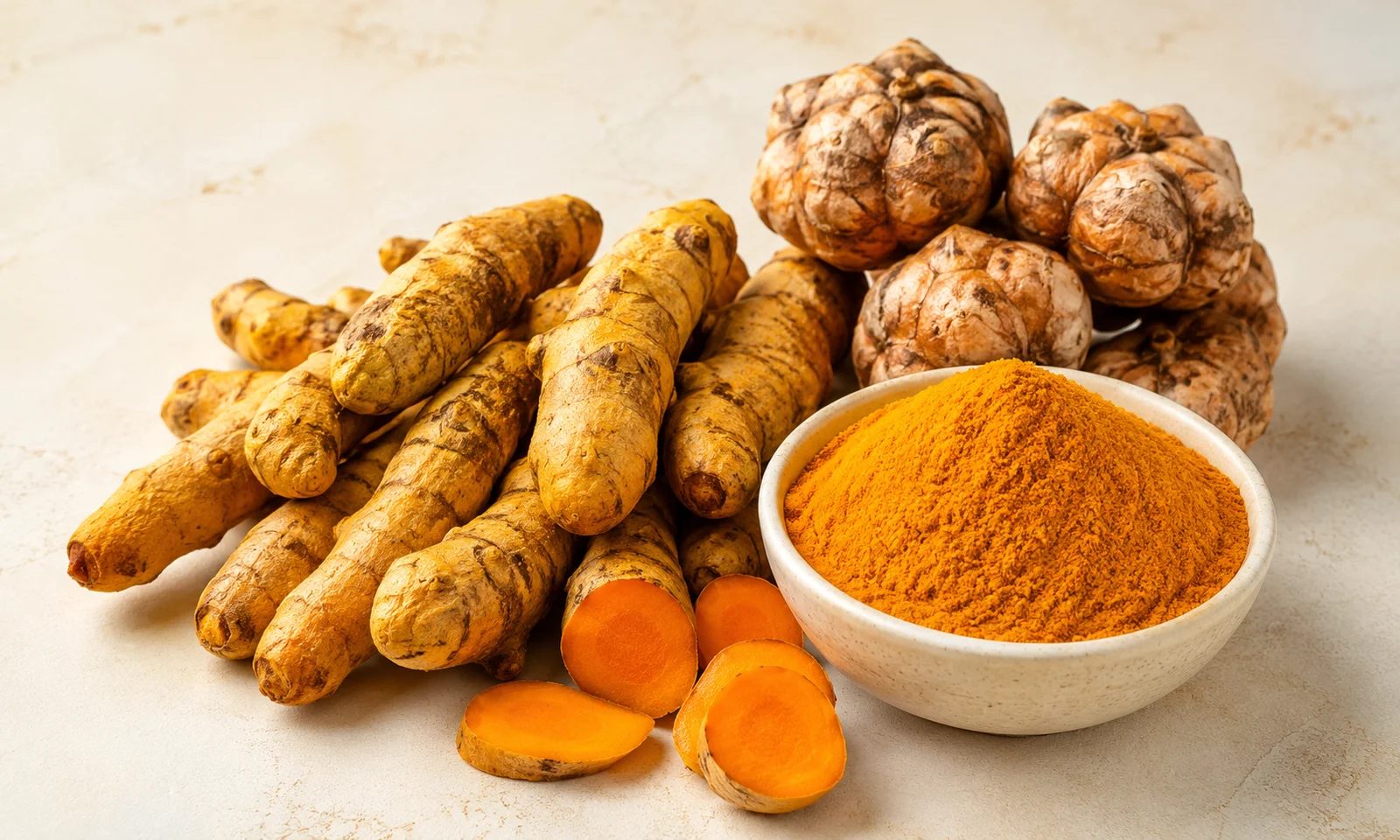
Bright golden-yellow, high curcumin. Grown in Erode — 'Turmeric City of the World'. Most widely traded variety globally.

Bold, round and golden bulb turmeric from Telangana. Preferred in pharmaceutical and cosmetic industries for uniform sizing.

Compact finger turmeric from Salem, Tamil Nadu with deep orange-yellow colour. Popular for oleoresin extraction and spice blending.
Large bold rhizomes from Maharashtra. High oil content and vibrant colour. Preferred by food manufacturers for colour applications.
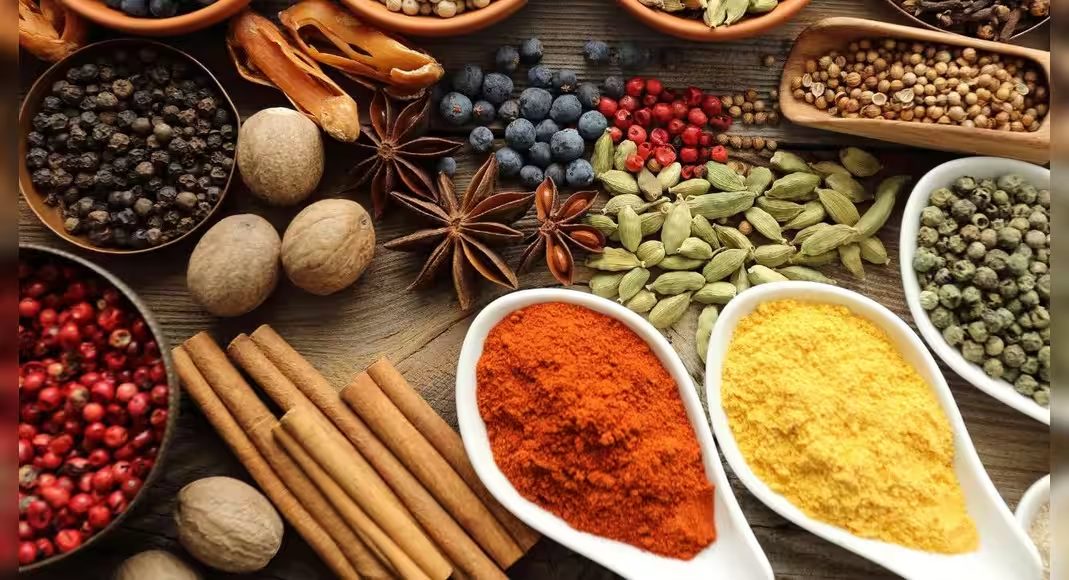
Well-rounded curcumin profile from Maharashtra (Sangli) and Andhra Pradesh (Cuddapah). Popular in 🌍 Gulf · UK · US retail markets.
Highest curcumin content of any Indian turmeric. GI-tagged from Meghalaya. Niche market for nutraceuticals and premium health food.
Smooth texture and attractive yellow colour. Bulk finger and powder for food manufacturing in Europe and Japan.

High oleoresin content from Krishna and Guntur, AP. Used in curry powder manufacturing and food dye industry.
Known globally as 'Alleppey Finger'. Good volatile oil and distinctive flavour. Preferred in European spice blending.
Tamil Nadu; known for deep golden-yellow colour and high curcumin content (3–4%). Premium export variety.
Telangana; large bulbs with bold colour. Most commercially exported variety from India.
Tamil Nadu; elongated fingers with high oleoresin content. Preferred for pharmaceutical and cosmetic use.
Machine-polished turmeric fingers with bright golden sheen. Premium visual quality for retail markets.
Natural sun-dried bulbs; used in food processing and industrial applications.
Finely ground from dried fingers/bulbs. Curcumin content verified by HPLC. Food-grade and pharmaceutical-grade available.
Beds are raised on friable loam soils and healthy mother and finger rhizomes are selected as seed material, which strongly influences yield and curcumin content.
Seed rhizomes are planted at the onset of the monsoon under mulch, which conserves soil moisture and suppresses weeds during establishment.
Irrigation, earthing-up and nutrition continue through the long growing season while tillers multiply and rhizome clumps develop underground.
When leaves yellow and dry down, clumps are lifted whole. Fingers are separated from mother bulbs and both are cleared of soil and rootlets.
Harvested rhizomes are washed and sorted, with damaged material removed before curing begins.
Rhizomes are boiled until the characteristic aroma develops and a finger crushes softly, gelatinising the starch for even colour and easier drying.
Cured turmeric dries on clean yards to below 10% moisture, turned regularly to produce uniform, hard fingers.
Dried fingers are tumbled in polishing drums to shed scales and rootlets, revealing the bright ochre surface buyers expect.
Material is graded by size, colour and origin, then packed in jute or PP bags, or milled and packed as turmeric powder to buyer requirement.
Import Export Code from DGFT — mandatory for all Indian turmeric export operations.
Registration with the Spice Board of India — the regulatory authority for spice exports covering turmeric fingers, bulbs and powder.
Food Safety and Standards Authority of India — ensures turmeric meets food safety, adulteration-free standards for global food markets.
Plant Quarantine certification confirming turmeric rhizomes are pest and disease-free for international shipment.
Sourcing, processing and export preparation of turmeric at KSR Exports.
Request pricing, samples or export documentation. Our team responds within 24 hours.